
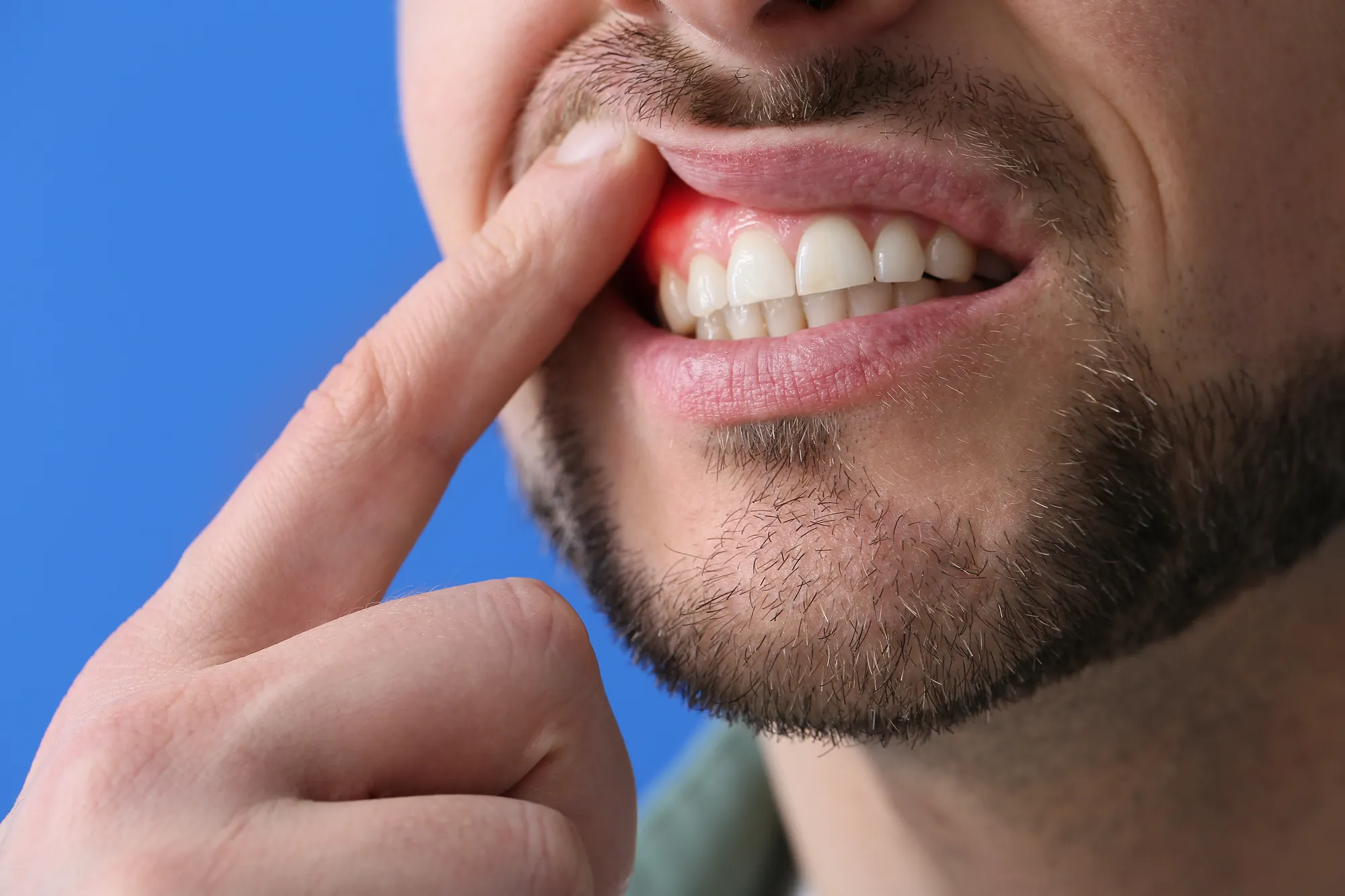
The periodontitis it is a Silent but serious illness, responsible for the progressive destruction of Gum tissue. The Italians’ 60% is impressive, but too often it goes unnoticed, until it turns into a serious problem. Recognising the signs in time is fundamentalintervene quickly to save one's teeth and prevent more complex complications.
Olbia Dental Studio, represents a reference point for Periodontal disease treatment in North Sardinia thanks to the use of evidence-based periodontal protocols and the integration of digital tools to detect the disease in its early stages.
Summary
What is periodontitis and the difference with gingivitis
Periodontitis is a chronic bacterial infection that attacks the supporting tissues of the teeth: gums, periodontal ligament, and bone. It almost always arises from a Neglected gingivitis, but unlike the latter, it doesn't just cause superficial inflammation: it penetrates under the gums, colonises the roots of the teeth and causes progressive bone loss.
Gingivitis, which is treatable, can progress to irreversible periodontitis.
To simplify: pathogenic bacteria creep into the crevices between tooth and gum, creating the so-called “periodontal pockets”, little spaces where they proliferate undisturbed. Inside these pockets, it forms Subgingival calculus, impossible to remove with a toothbrush. The bone, irritated by the bacterial presence, slowly recedes.
And it is here that gingivitis — reversible — transforms into periodontitis, irreversible if not treated by a expert periodontologist.
What distinguishes them
The key difference is this: Gingivitis causes red and bleeding gums, while periodontitis causes teeth to lose support., until their mobility and eventual loss. And it's a condition that often doesn't cause pain, which is why many people underestimate the early signs. For this reason, at our practice in Olbia, we carry out periodontal screenings during every professional hygiene appointment.
Periodontitis is insidious: it rarely hurts. Precisely for this reason, it tends to be discovered too late. However, there are some warning signs that should not be ignored:
- Persistent bad breath
- Bleeding gums during brushing
- Teeth starting to shift, move or “come through”
- Black triangular spaces between the teeth
- Wobbly tooth sensation
If you recognise any of these symptoms – even just one – it is very likely that periodontitis is already present. Sometimes the signs are noticed not in oneself, but in a family member: it is still important to intervene. The disease, in fact, progresses without pain, but can lead to serious and rapid consequences.
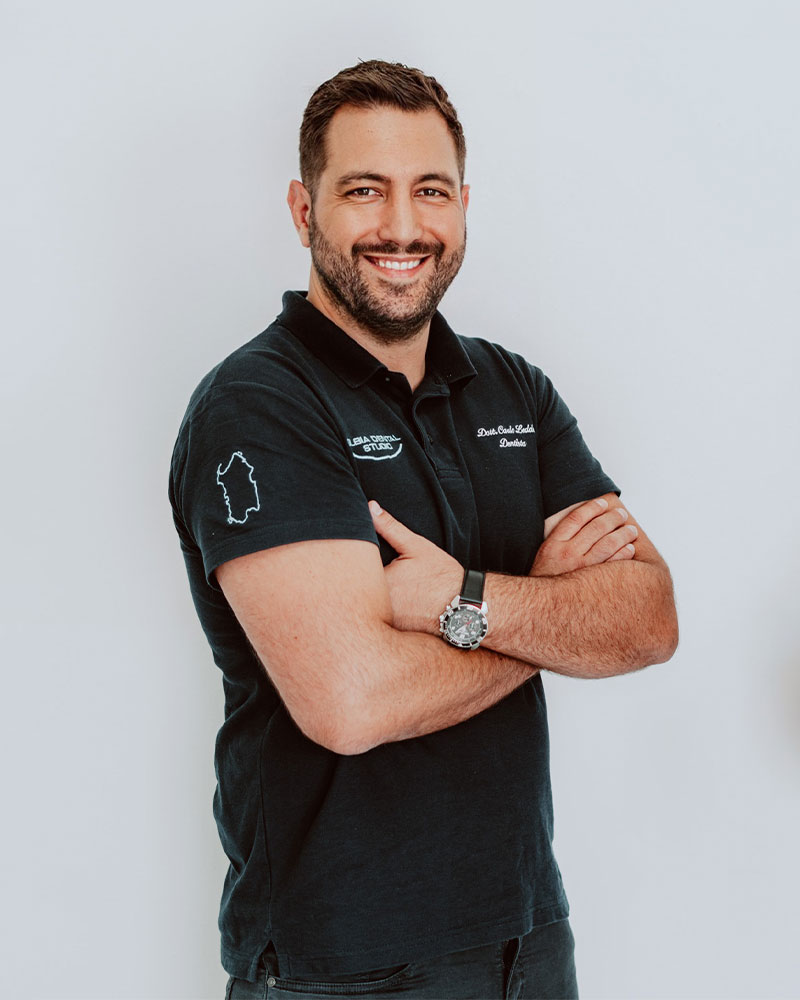
In our Dental practice in Olbia, Dr Ledda execute a Full periodontal assessment to also detect the earliest signs of the disease.
Why should it not be underestimated
Periodontitis is not “just” a gum problem: it is a genuine Chronic infectious disease which, if neglected, inevitably leads to tooth loss.
The progression is almost always the same:
- Gums start bleeding
- Increasingly deep periodontal pockets are formed.
- Swelling and even pus may appear
- Gums are receding, making teeth appear longer
- The bone disappears and the teeth lose stability, moving forwards or outwards.
- My teeth are becoming loose
- In the end, they fall by themselves.
Furthermore, today we know that Periodontitis worsens diabetes and increases the risk of cardiovascular disease and can be associated with premature birth.
The good news is that, by relying on an expert periodontist, periodontitis can be treated and, if detected early, it is possible to keep your teeth healthy and stable for many years. For those living in Olbia and Northern Sardinia, Olbia Dental Studio offers therapeutic protocols updated to the latest scientific evidence.
Early diagnosis with advanced tools
An accurate diagnosis is the first step to stopping the illness. At Olbia Dental Studio We use evidence-based periodontal protocols and digital tools that allow us to measure pocket depth, detect hidden tartar, and assess bone loss.
The visit includes:
- Periodontal charting complete with millimetric measurement of pockets
- Targeted X-rays to assess bone loss
- Detailed analysis of individual risk factors (smoking, diabetes, genetic predisposition)
This allows us to distinguish between simple gingivitis and early or advanced periodontitis, and to build a personalised treatment plan. Early diagnosis makes the difference: the sooner the disease is intercepted, the more teeth can be saved and invasive therapies avoided.
At our centre in Olbia, Dr Ledda pays particular attention to the diagnostic phase, which is fundamental for establishing the most effective treatment plan.
Treatments available at Olbia Dental Studio
Modern periodontal therapy is standardised and scientifically validated. At our clinic in Olbia, we follow an effective, evidence-based protocol, led by Dr. Ledda and our team of specialist hygienists.
Hygiene and scaling: causal therapy
Lo Scaling and root planing (root planing) remove tartar and bacteria below the gum line, smoothing the roots to prevent re-colonisation by bacteria. It is a fundamental therapy in the early and intermediate stages of the disease and forms the basis of periodontal treatment.
It requires precision, time, and patient collaboration, who must improve the quality of home hygiene to maintain the results. The procedure is performed under local anaesthetic to ensure maximum comfort.
At our Olbia studio, we use the latest generation sonic and ultrasonic instruments, which allow for deep decontamination, even in the most difficult-to-reach pockets.
Regenerative surgery
In advanced forms of periodontitis, when bone tissue has been significantly compromised, the Regenerative surgery allows – in selected cases – to reconstruct part of the lost bone.
We use modern techniques and Biomimetic materials that promote bone regeneration and the long-term stability of teeth. It is not always necessary, but it can make a difference in more complex cases.
Dr. Ledda always carefully assesses the cost-benefit ratio and discusses realistic expectations of the regenerative procedure with the patient, performed at our centre in Olbia using advanced surgical protocols.
Advantages of modern technologies
Current technologies allow for more precise diagnoses and less invasive treatments compared to the past. In our study, we integrate the use of lasers, minimally invasive instruments and digital imaging with advanced protocols. This allows us to:
- Reduce pain and recovery times post-operative
- Identify the illness before irreversible damage appears
- Monitor treatment response over time with regular checks
- To personalise the treatment for each individual patient
This technological improvement translates into more effective, safer, and predictable treatments, even for those who have already lost some periodontal support.
How to maintain results over time
Periodontal therapy only works if it is followed by a Constant maintenance program. The disease tends to reactivate if bacteria recolonise the periodontal pockets.
For this reason, at the end of the active therapeutic phase, they are scheduled Periodic reminders, usually every 3-4 months, during which:
- Let's check gum health with simplified mapping
- Let's remove the residual supragingival and subgingival tartar.
- Let's update the personalised home hygiene instructions.
- We will monitor for any predisposing factors
The fundamental role of the patient
Patient commitment is fundamental: correct brushing, daily use of floss or interdental brushes, an optional oral irrigator, and attention to risk factors (smoking, diabetes, genetic predisposition).
With consistency and regular monitoring, results are maintained long-term and the risk of relapse is drastically reduced.Our team provides detailed instructions and ongoing support to ensure long-term therapy success.
The link between periodontitis and implantology
When periodontitis is not intercepted in time and the teeth cannot be saved, the’dental implants represents an effective solution. However, the infection must be treated first: inserting an implant in an inflamed environment exposes it to the risk of peri-implantitis, a disease very similar to periodontitis that can lead to implant loss.
Why treat periodontitis before implants
Treating periodontitis before implantology allows you to:
- To create a healthy and stable oral environment for osseointegration
- Increase the lifespan of facilities in the long run
- Achieve better aesthetic results with healthy gum tissue
- Avoid relapses and complications like peri-implantitis
In our Olbia studio, we follow a rigorous protocol: comprehensive periodontal therapy, re-evaluation after a few months to check for stabilisation, and only then implant placement in a controlled environment.
Periodontitis and orthodontics
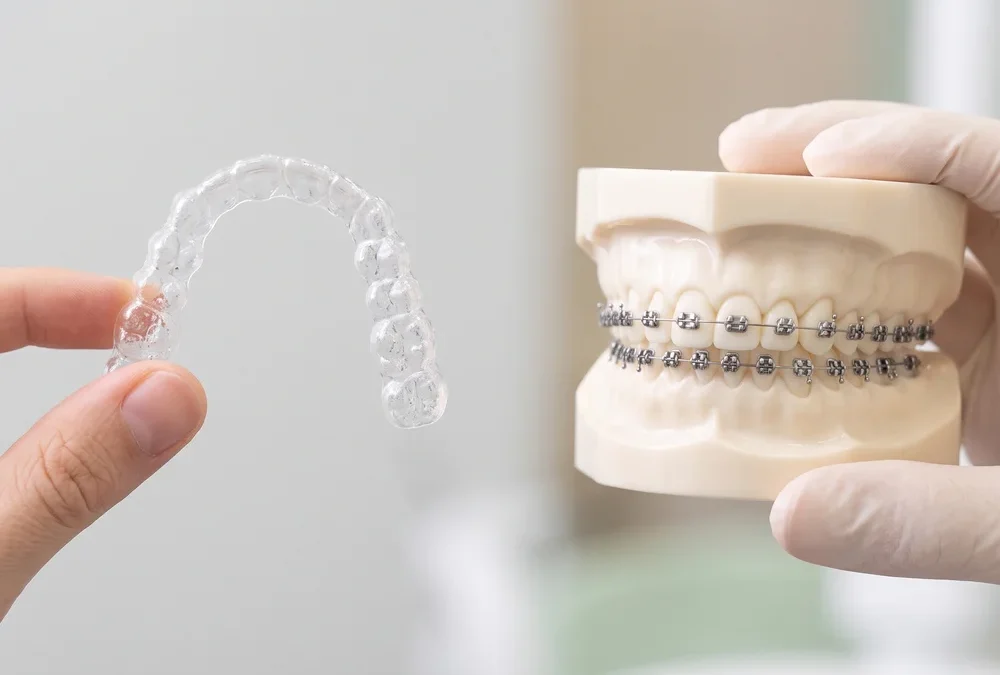
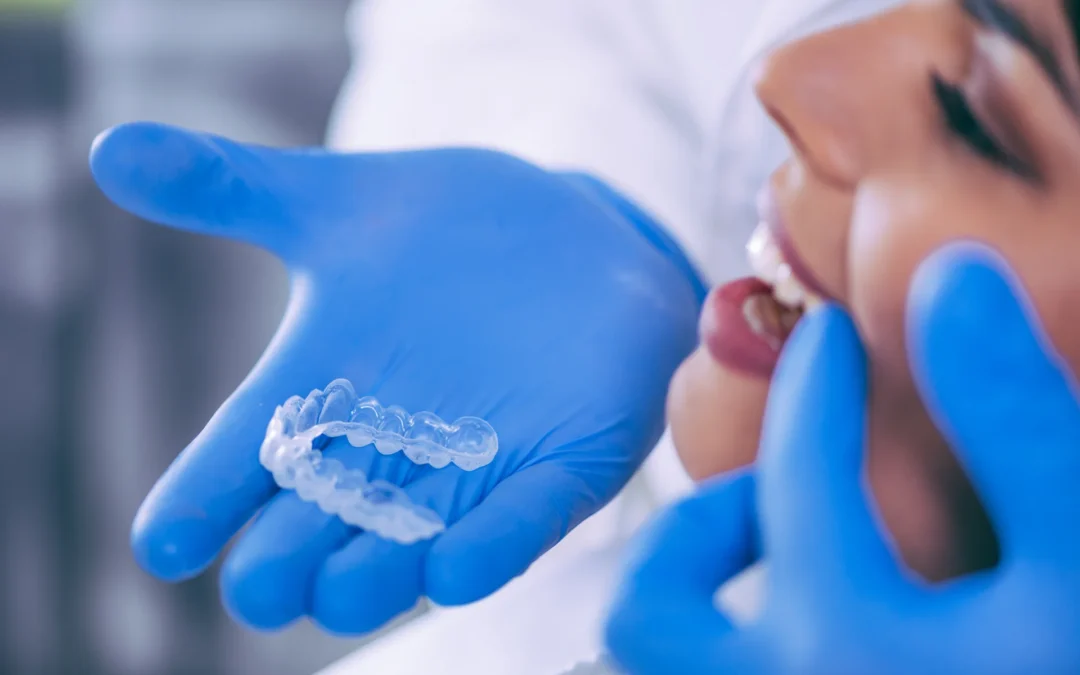
Also the’Clear orthodontics is linked to periodontal health: healthy teeth and stable gums are essential before starting any alignment treatment. Moving teeth in the presence of active periodontitis dramatically accelerates bone loss..
Dr. Ledda always assesses periodontal status before proposing implant or orthodontic rehabilitation at Olbia Dental Studio, ensuring that every intervention is carried out under optimal conditions.
Frequently asked questions about periodontitis
Does periodontitis hurt?
No. And that's precisely the problem. In most cases, it doesn't cause pain, so it progresses unchecked until it becomes severe. The main symptoms are not painful: bleeding, bad breath, teeth shifting. This is why it's essential to have regular check-ups even in the absence of obvious symptoms.
2. Can I cure it with a professional cleaning?
The simple A superficial clean isn't enough. Routine professional cleaning only removes visible supragingival tartar, but does not access periodontal pockets where the disease develops. A specific treatment called Periodontal therapy (scaling and root planing), carried out by an experienced professional, which reaches the areas under the gum where bacteria proliferate.
3. If I lose a bone, can I get it back?
It depends. In some cases, the Regenerative surgery It allows for the reconstruction of part of the lost bone, especially in angular bone defects. In other cases, when the loss is more extensive and horizontal, recovery is not possible. Only a specialist examination at our clinic in Olbia can determine the most suitable solution for your specific case.
4. Does periodontitis return?
non si segue un Periodontal maintenance programme, yes. The illness is chronic and tends to reactivate if the bacteria return to colonise the pockets. With regular check-ups every 3-4 months at Olbia Dental Studio with correct daily home hygiene, it can be kept under control for a lifetime, avoiding further tooth loss.
5. Can I have implants if I have gum disease?
Yes, but only after treating and stabilising her. Introducing dental implants into a mouth with active periodontitis means exposing the fixtures to the same bacteria that caused the loss of the natural teeth, with a very high risk of developing peri-implantitis and early loss of the implants. The correct protocol involves: complete periodontal therapy, re-evaluation after a few months, stabilisation of the infection, then possible implantology.
6. Is it hereditary?
Is there a Family predisposition which makes some people more susceptible to periodontal disease (around 30% of the population are at increased risk). However, the genetic component alone is not sufficient: the disease only develops in the presence of Plaque and tartar accumulated over time. With good oral hygiene, daily flossing and regular check-ups, the risk can be drastically reduced even in those with a predisposition.
Book a periodontal check-up in Olbia
If you have noticed one of the symptoms described – even just one – it is important not to wait. Periodontitis does not heal on its own and the longer you wait, the more irreversible the damage becomes.
In our study, the Dr Ledda and the team Of Olbia Dental Studio They carry out in-depth examinations with periodontal charting, digital X-rays and precise diagnoses to detect the disease in its earliest stages, when it is most easily manageable.
Our centre represents a point of reference for Periodontitis treatment in Olbia and in the North Sardinia, thanks to:
- Evidence-based therapeutic protocols
- Advanced technologies (laser, digital imaging, minimally invasive instruments)
- Established experience in complex case management
- Bespoke maintenance programmes for long-term stability
Book a periodontal check-up at Olbia Dental Studio todayis the most important step for saving your teeth and maintaining a healthy smile for life.
For appointments or information on Periodontal therapy in Olbia, contact the our secretariatOur team will be happy to answer all your questions and arrange an initial, no-obligation visit.
Prevention starts today. Your teeth deserve to last forever.



 Italiano
 English (UK)
 Español
 Français
 Română
 Русский
 Sardu
Sardu